
The Architecture of Sight: Why Your Next Eye Exam is a Health Screening in Disguise
The Architecture of Sight: Why Your Next Eye Exam is a Health Screening in Disguise
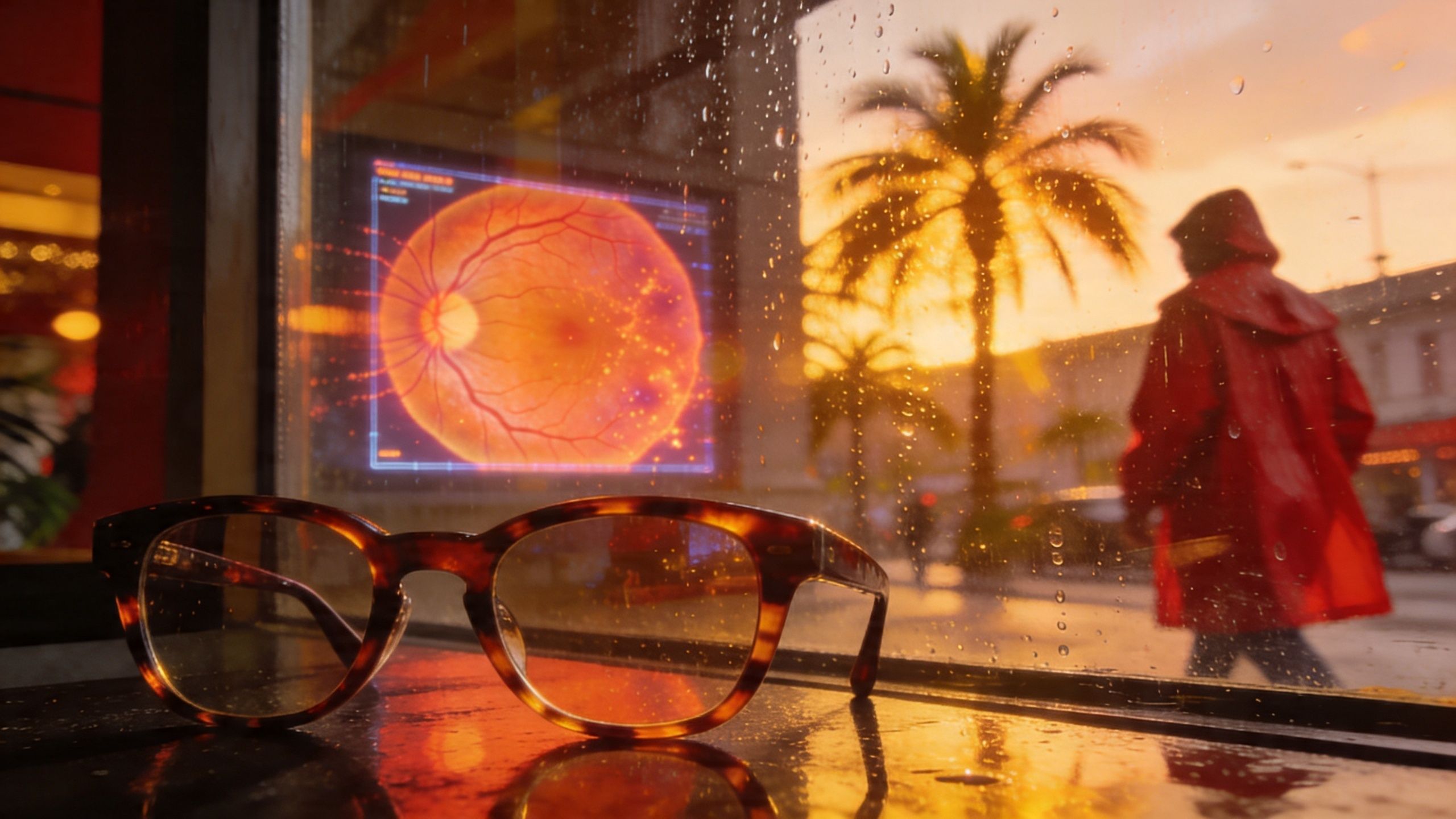
The flash lasts a fraction of a second. It’s a strobe of green and red light that captures 200 degrees of your retina in a single, silent heartbeat. Most people think they’re at Modern Optical FL just to find out if their contact lens prescription has shifted by a quarter-diopter. They aren’t. They’re here because that millisecond of light—captured by our ultra-widefield retinal imaging—tells a story about their heart, their brain, and their future that a simple vision chart can’t touch.
The 200-Degree View
In the old days, an eye exam involved a handheld scope and a lot of “look up and to the left.” It was like trying to inspect a dark room through a keyhole. You saw bits and pieces, but never the whole floor plan.
Modern diagnostics changed the geometry of the exam. With advanced retinal imaging, we aren’t just checking if you can read the bottom line of the Snellen chart. We’re looking for the first whispers of hypertension, the microscopic leaks of diabetic retinopathy, or the thinning tissue that signals glaucoma. We see the vasculature of your body laid bare. It’s the only place on the human frame where a doctor can see your blood vessels and nerves in their natural state without making an incision.
I’ve sat with patients who came in complaining of a slight blur and left with a referral to a cardiologist because their retinas showed signs of vascular narrowing they hadn’t felt yet. That isn’t just optometry; it’s a physical for your entire system.
The Weight of the Frame
Once the health of the eye is cleared, the conversation shifts from the biological to the aesthetic. This is where the “optical” side of the house earns its keep.
Choosing a frame isn’t about what’s on the mannequin. It’s about the bridge of your nose, the distance between your pupils, and the specific way you hold your head when you’re focused on a laptop. A frame that slides down your nose every three minutes isn’t a fashion statement; it’s a failure of engineering.
We curate collections—from the architectural lines of independent designers to the timeless weight of heritage brands—because eyewear is the only medical device you wear on your face. It has to perform. It has to disappear when you’re reading but stand out when you walk into a room on University Drive.
The Science of the Lens
Blue-Light Filtering: Not a gimmick, but a necessity for the 10-hour-a-day screen grind. It reduces the digital eye strain that leaves you with a dull throb behind your temples by 4 PM.
High-Index Materials: We’ve moved past the “Coke bottle” era. Even complex prescriptions can now be housed in thin, lightweight materials that don’t distort the size of your eyes.
Photochromic Tech: In the Florida sun, the transition from the dim interior of a café to the blinding white light of a Coral Springs parking lot happens fast. Your lenses should keep up.
The Florida Tax: UV and Blue Light
Living in Coral Springs means we pay a constant tax to the sun. UV radiation isn’t just a skin concern; it’s a primary driver of cataracts and macular degeneration. We see it every day: patients in their 40s with the ocular wear-and-tear of someone twenty years older because they treated sunglasses as an optional accessory rather than a protective shield.
Investment in quality polarized lenses isn’t about brand names. It’s about blocking the horizontal glare bouncing off the pavement and the hood of your car. It’s about clarity that doesn’t require squinting.
More Than a Number
At the end of the day, a prescription is just a set of coordinates. 20/20 is the baseline, not the finish line. True vision care is about the patient who realizes they can finally see the individual leaves on the oak trees in their backyard, or the grandmother who can read a bedtime story without her eyes watering from fatigue.
We don’t do five-minute exams. We don’t do one-size-fits-all. We build a profile of your lifestyle—what you eat, how much you sleep, how many hours you spend staring at a smartphone—and we build a vision plan around it.
Your eyes are the most hardworking muscles in your body. Treat them like the sophisticated instruments they are.