
How to Prevent Digital Eye Strain in the Work-From-Home Era
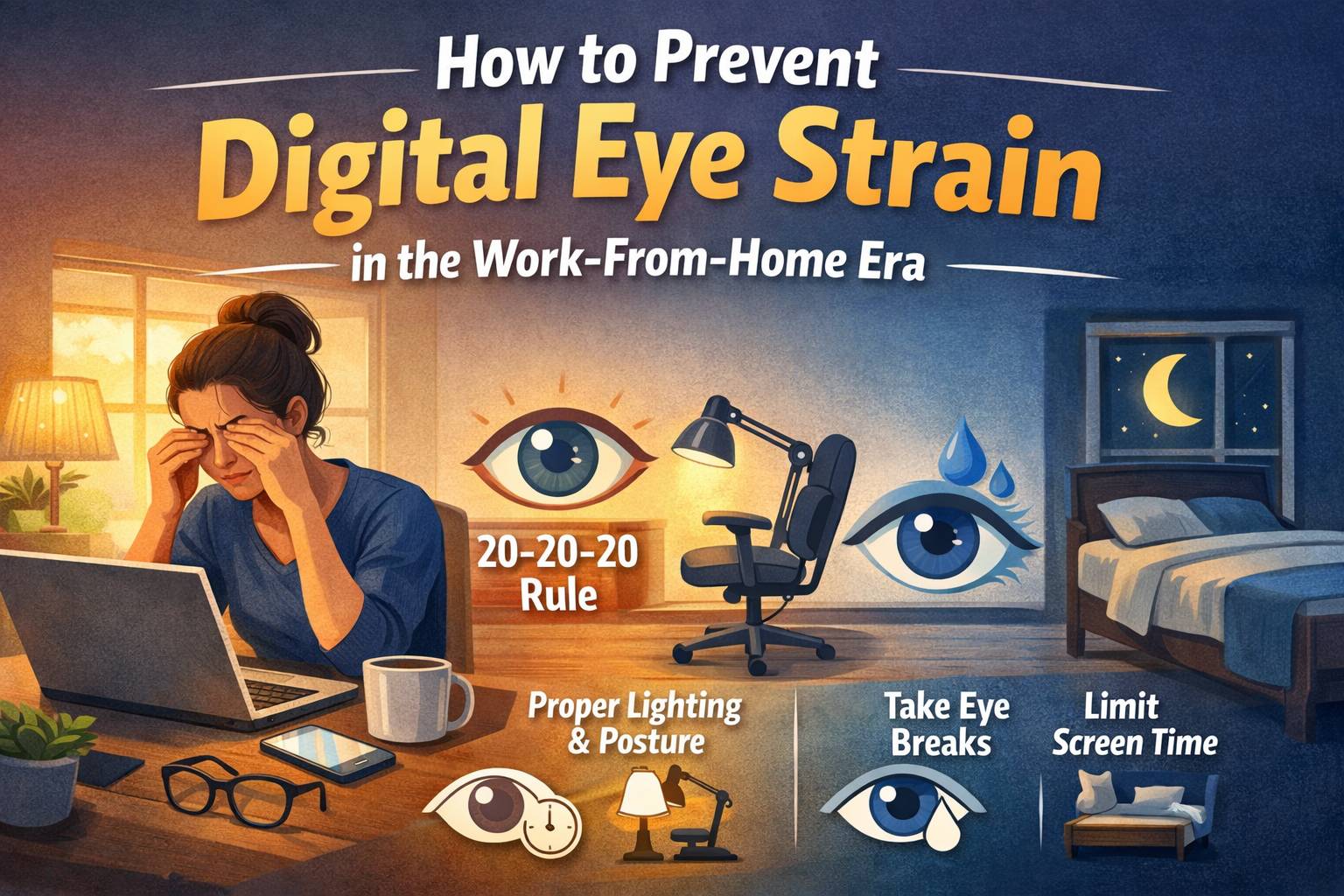
The shift to remote work has increased our dependence on screens more than ever before. From laptops and tablets to smartphones and multiple monitors, many professionals now spend 8–10 hours a day staring at digital devices. While technology makes work convenient, prolonged screen time can lead to digital eye strain—also known as computer vision syndrome. Understanding how to protect your eyes is essential for maintaining comfort, productivity, and long-term eye health in the work-from-home era.
What Is Digital Eye Strain?
Digital eye strain refers to a group of eye and vision-related problems that result from extended screen use. Common symptoms include blurred vision, headaches, dry eyes, neck pain, and difficulty focusing. Unlike reading a book, viewing digital screens requires constant focusing and refocusing, which puts extra demand on the eye muscles. Blue light exposure and reduced blinking while working on screens further contribute to discomfort.
Follow the 20-20-20 Rule
One of the simplest and most effective ways to prevent eye strain is the 20-20-20 rule. Every 20 minutes, take a 20-second break and look at something at least 20 feet away. This practice relaxes the focusing muscles of the eyes and reduces fatigue. Setting a timer or using reminder apps can help you make this habit part of your daily routine.
Adjust Your Screen Setup
Proper workstation ergonomics play a crucial role in reducing strain. Your screen should be positioned about an arm’s length away and slightly below eye level. Avoid placing your monitor directly in front of a window or bright light source to minimize glare.
Adjust brightness and contrast settings so that your screen is comfortable, not too bright and not too dim compared to your surrounding environment. Increasing text size can also reduce squinting and strain.
Blink More and Stay Hydrated
When focusing on screens, we tend to blink less frequently. Reduced blinking can lead to dry, irritated eyes. Make a conscious effort to blink fully and regularly. Staying hydrated and using lubricating eye drops, if recommended by an eye care professional, can also help maintain moisture and comfort.
Use Proper Lighting
Lighting in your workspace should be soft and balanced. Harsh overhead lights or strong backlighting can increase glare and strain. Consider using an adjustable desk lamp and positioning light sources to reduce reflections on your screen. Anti-glare screen protectors or lenses with anti-reflective coating may also improve visual comfort.
Limit Blue Light Exposure
Blue light emitted from digital devices can disrupt sleep patterns and contribute to eye fatigue. While research is ongoing regarding its long-term impact, reducing blue light exposure in the evening is beneficial. Use blue light filters on devices, enable “night mode” settings, or consider lenses designed to filter blue light if you spend extended hours on screens.
Maintain Regular Eye Exams
Regular comprehensive eye exams are essential, especially for those working remotely. An updated prescription ensures that your eyes are not overcompensating while focusing on screens. Eye exams can also detect underlying issues that may worsen digital eye strain. If you experience persistent discomfort, an eye care professional can recommend personalized solutions.
Key Takeaways
Working from home offers flexibility and convenience, but it also demands mindful eye care. By adopting healthy screen habits, optimizing your workspace, and scheduling regular eye checkups, you can significantly reduce digital eye strain.
Taking small preventive steps today will protect your vision, enhance productivity, and ensure long-term eye health in our increasingly digital world.